10 New Changes to California’s Rental Laws for 2024

March 14, 2024
A row of palm trees against a blue sky

California's rental market is undergoing significant changes in 2024 with the implementation of 10 new rental laws, marking a crucial shift for both landlords and tenants. These legislative alterations aim to address various concerns within the state's rental sector. Here, we'll explore these changes in detail to understand their implications and how they will impact landlords and tenants alike. Staying informed about these updates is essential for landlords, property managers, and owners to navigate California's dynamic real estate market effectively this year.


SB 567: Just Cause Eviction

An amendment to the Tenant Protection Act of 2019 introduces stricter conditions for landlords invoking the no-fault just cause eviction policy. Landlords now need to provide tenants with specific advance notices, and if the landlord or their family plans to move in, they must do so within 90 days and reside for at least a year. Non-compliance with these new stipulations may result in financial penalties for property owners.


AB 12: Security Deposits

Commencing July 1, 2024, there will be a significant change in security deposit requirements for California landlords and tenants. Property owners will be limited to collecting a maximum of one month's rent as a security deposit. There is one exception that small property owners with no more than two rental properties containing four units or fewer can request up to two months' rent for a security deposit (the “Mom & Pop exception). However, there is an exception to this exception for Military personnel. Any active military renter can be charged no more than one month’s rent for the security deposit.


SB 712: Micromobility Devices (E-Scooters, etc)

Acknowledging the increasing popularity of eco-friendly transportation, California tenants now have the right to store and charge electric scooters and bikes within their apartments, provided the devices meet specific safety standards. Landlords can require insurance for these devices if safety standards aren't met, and they may offer secure, long-term storage solutions on the premises.


SB 721: Balcony Inspections

SB 721 enhances the safety of multi-unit properties by mandating professional inspections for structures with three or more units containing balconies or “exterior elements.” Qualified safety inspectors must conduct this inspection, with the initial deadline set for January 1, 2025, followed by mandatory inspections every six years to ensure ongoing safety and compliance.


AB 1418: Nuisance Ordinances and Evictions

Under AB 1418, local governments will no longer be able to mandate that landlords must evict and exclude tenants for alleged or prior criminal conduct. It does not prevent landlords from initiating nuisance-related evictions and screening prospective residents based on criminal histories of their own accord, however.


SB 267: Credit History

Landlords are now prohibited from using a tenant's credit history to determine eligibility for rent-subsidized housing without providing alternate means for tenants to prove their ability to pay rent, such as income verification or renting history.


AB 1620: Renters With Mobility-Related Disabilities

This law authorizes local jurisdictions to adopt regulations requiring property owners to allow tenants with permanent mobility-related disabilities to move into an accessible comparable (or smaller) apartment unit and retain their current rental rate and terms.


Statewide Rent Control

Enacted in response to COVID-19, the California Tenant Protections Act of 2019 establishes statewide rent control, capping yearly rent increases at 10% or 5% + local CPI, with some jurisdictions imposing even stricter regulations.


City of Los Angeles Rent Increases

Los Angeles' rent-controlled apartments experienced an unprecedented rent freeze until February 1, 2024, after which property owners could implement a 4% rent hike on most tenants with an additional 1% increase per utility if landlords cover utilities such as electricity and gas.


Unincorporated L.A County

Rent control regulations in unincorporated areas of Los Angeles County allow for rent increases of up to 3% as of February 1, 2024, as determined by county elected officials.


These 10 new rental law changes in California for 2024 signify a significant update to the state's housing regulations. From tenant rights to safety inspections and rent increases, these laws underscore the importance of awareness and compliance for both landlords and tenants. For further inquiries on how these rental laws may impact your business or investments, feel free to contact us at info@crescent-canyon.com or 310-338-0500.

Share this post

  • Renter looking for a place to move to?

    Check out our vacancies! We are constantly updating our available properties, so check and see if your dream home is waiting for you.

  • Property owner looking for a property manager?
    Describe the item or answer the question so that site visitors who are interested get more information. You can emphasize this text with bullets, italics or bold, and add links.
  • Vendor looking to partner with us for services?
    Describe the item or answer the question so that site visitors who are interested get more information. You can emphasize this text with bullets, italics or bold, and add links.

Contact Us

By Crescent Canyon Blog Post May 19, 2026
Fiduciary property management is a specialized discipline that combines operational expertise with financial stewardship, legal awareness, and professional judgment. In California’s highly regulated environment, certified fiduciaries benefit greatly from partnering with experienced property managers like Crescent Canyon Mgmt who understand the unique responsibilities involved in managing multifamily and commercial real estate assets under fiduciary oversight. The most effective fiduciary property managers do more than manage buildings—they protect value, reduce risk, support fiduciaries, and help ensure that real estate assets are handled with the highest standard of care. Here are the 10 most critical beset practices for managers of fiduciary run properties. 1. Prioritize Fiduciary-Level Transparency A fiduciary property manager must understand that the real estate asset is often being managed on behalf of beneficiaries, heirs, conservatees, trusts, or estates. This requires complete transparency in all operations and financial reporting. Best practices include: Detailed monthly financial statements Clear vendor invoices and backup documentation Consistent communication with the fiduciary Accurate rent rolls and delinquency reporting Documentation of all major decisions and expenditures Transparency builds trust and helps fiduciaries fulfill their own legal and ethical obligations. 2. Maintain Strong Regulatory and Legal Compliance California and local City (especially Los Angeles) property laws are among the most complex in the nation. A fiduciary property manager must remain current on ever evolving regulations involving Fair housing laws Rent control ordinances Habitability requirements Commercial lease compliance Security deposit regulations ADA accessibility standards Vendor and contractor licensing Failure to comply can expose the fiduciary and the estate or trust to significant liability. Strong compliance systems help protect both the asset and the fiduciary relationship. 3. Protect and Preserve Asset Value A fiduciary property manager should approach every decision through the lens of asset preservation and long-term value enhancement. This includes: Preventive maintenance programs Routine property inspections Capital improvement planning Vendor oversight and quality control Budget forecasting for deferred maintenance In fiduciary management, preserving the physical integrity and market value of the property is a core responsibility—not merely an operational goal. 4. Communicate Proactively and Professionally Certified fiduciaries often oversee multiple complex matters simultaneously. Property managers who communicate proactively become invaluable partners. Strong communication practices include: Prompt responses to inquiries Advance notice of major issues Immediate reporting of emergencies Executive-style summaries of property performance Recommendations with supporting analysis Rather than simply reporting problems, effective fiduciary property managers present solutions and strategic guidance. 5. Implement Rigorous Financial Controls Financial accountability is one of the most important aspects of fiduciary property management. Best practices include: Segregation of trust funds with monthly reconciliations Accurate bookkeeping Timely rent collection Thorough expense tracking Annual budget preparation Reserve planning Professional financial controls reduce risk, improve reporting accuracy, and provide confidence to fiduciaries, beneficiaries, attorneys, and accountants. 6. Understand the Unique Nature of Fiduciary-Owned Assets Properties managed for trusts, probate estates, conservatorships, or court-supervised matters often involve sensitive family dynamics and heightened legal oversight. An experienced fiduciary property manager understands how to navigate: Occupied inherited properties Difficult family situations Distressed assets Court timelines and approvals Beneficiary disputes Transitional ownership circumstances This requires diplomacy, discretion, patience, and professionalism. 7. Build a Reliable Vendor and Contractor Network A strong fiduciary property manager maintains relationships with licensed, insured, and dependable vendors. The best managers carefully vet: General contractors Plumbers and electricians HVAC vendors Roofers Janitorial providers Security companies Restoration and emergency-response teams Reliable vendors help reduce liability, improve response times, and ensure work is completed properly and cost-effectively. 8. Focus on Tenant Stability and Retention Stable tenancy is essential for preserving cash flow and reducing operational disruption. Effective fiduciary property managers prioritize: Professional tenant relations Timely maintenance response Consistent lease enforcement Fair and respectful communication Strategic lease renewals Careful tenant screening In both multifamily and commercial properties, tenant retention often directly impacts the long-term financial health of the asset. 9. Prepare for Emergencies and Risk Events Unexpected events can quickly become major fiduciary concerns if not handled properly. Professional fiduciary property managers should maintain: Emergency response protocols Disaster preparedness plans Vendor emergency contacts Insurance coordination procedures Incident documentation systems Whether responding to water intrusion, fire damage, security incidents, or natural disasters, preparation is critical. 10. Operate with Professionalism, Integrity, and Discretion Above all else, fiduciary property management requires trust. The best fiduciary property managers demonstrate: Ethical decision-making Professional discretion Calm problem-solving Consistency under pressure Respect for confidentiality Accountability in every interaction Because fiduciaries are often managing highly sensitive matters involving families, estates, incapacity, or litigation, professionalism and integrity are essential qualities—not optional ones.
By Crescent Canyon November 3, 2025
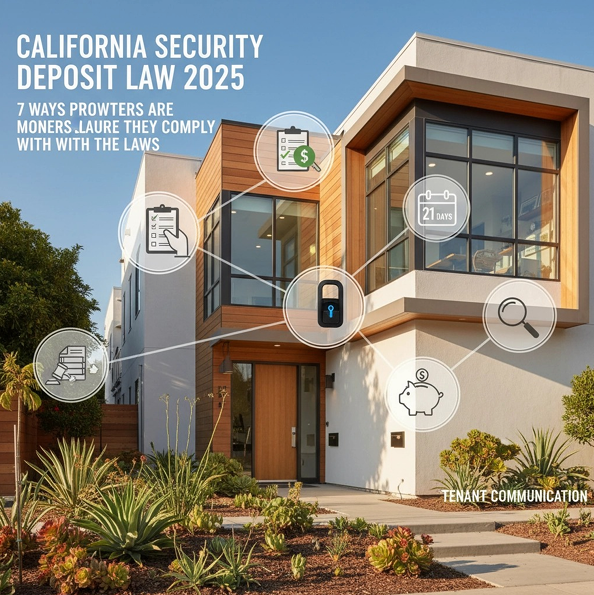
California's security deposit landscape has undergone a seismic shift in 2025, with Assembly Bills 12 and 2801 fundamentally altering how property owners handle tenant deposits. The confluence of these regulatory changes represents both a challenge and an opportunity for savvy landlords who adapt quickly to the new requirements. Smart property owners across Los Angeles aren't just scrambling to meet minimum compliance standards: they're implementing systematic approaches that turn these new regulations into competitive advantages. Here's how the most successful property managers are navigating California's evolving security deposit requirements. 1. Implementing Mandatory Photo Documentation Systems The most significant shift in 2025 centers around AB 2801's photography requirements, which take effect in two critical phases. Beginning April 1, 2025, landlords must photograph units immediately upon receiving possession and before any repairs, then again after completing repairs or cleaning for which they plan to deduct from security deposits.
By Crescent Canyon October 30, 2025
Managing multi-family properties in Los Angeles is not for the faint of heart. A confluence of regulatory shifts, market dynamics, and evolving tenant expectations has created a dynamic landscape that demands sharper execution. LA’s intricate web of rent control ordinances, layered with California’s expanding tenant protections, requires owners to master compliance while still protecting NOI. If it feels like running a Class A asset in a Class Z rulebook, you’re not wrong—just in the right place for solutions. To win in 2025, you must master LA’s three-tier regulatory system, deploy technology that systematizes operations, and stay ahead of market trends reshaping the multifamily sector. This guide distills what matters most so you can maximize returns while navigating the regulatory maze that defines Los Angeles real estate. Understanding LA's Three-Tier Rent Control System LA’s regulatory framework meaningfully impacts strategy, cash flow, and exit options. Your obligations hinge on the building’s construction date, which places you into distinct categories with very different rules—and very different ceilings on revenue.
Show More