Two Current challenges for Apartment Owners, and how to successfully navigate them:

July 10, 2024

In the dynamic landscape of real estate, apartment buildings have long been regarded as a stable investment. However, recent macroeconomic factors have formed a confluence of rising costs and new regulations for Owners and Managers that are difficult to navigate. Fortunately, there are some concrete strategies to help navigate this difficult world of increasing expenses. 2 of the most common factors are soaring insurance costs and escalating utility rates, and there are ways savvy owners and managers can mitigate these factors.


Utility rate increase are the first area of concern. Apartment building owners are vulnerable to upcoming hikes in utility rates, particularly water and sewer charges. Older properties are more likely to be master metered, so the owner will bear the brunt of utility increases. As an example, The Metropolitan Water District has passed a budget projecting an 8.5% increase in water rates for both 2025 and 2026. Moreover, owners can also expect their sewer bills to double in the next four year as LA Sanitation needs to complete upgrades to the aging infrastructure. These rate hikes have already been approved by the LA City Council. The best way for owners and manager to address these impending increases is to implement a RUBS program as much as possible (in addition to all the standard energy efficiency upgrades, like LED lights and low flow toilets). Older, rent controlled properties will be more limited in their RUBS adoption, however all new leases can and should be put on a RUBS program to help defer and share the costs of utilities at a property. As more units turn over time, the share of units on RUBS for a rent controlled property will only increase.


Possibly the most concerning increases right now are the skyrocketing costs of insurance. Over recent years, insurance premiums have seen a dramatic surge as many carriers have left the market. This abrupt escalation in insurance expenses has caught many property owners off guard, straining their financial resources and eroding profit margins. The best way to combat this affront is to have multiple great insurance brokers working for you. We know and work with many excellent insurance brokers, as not every broker has the best insurance partner for each property type or location. Good brokers know that sophisticated property owners need to get multiple bids for different kinds of coverages. Most good brokers know that they specialize in one or more particular type of asset class, and they focus their resources on maximizing the utility of that specialty. Recently, some potential 50% insurance rate hikes have been brought down to more-palatable increases of 5% - 20% by spending the time and energy to really understand coverages and get multiple bids.


The above said, have no fear! Crescent Canyon is skilled in navigating all kinds of property challenges and we have many different strategies to help maximize your investments. 


Share this post

  • Renter looking for a place to move to?

    Check out our vacancies! We are constantly updating our available properties, so check and see if your dream home is waiting for you.

  • Property owner looking for a property manager?
    Describe the item or answer the question so that site visitors who are interested get more information. You can emphasize this text with bullets, italics or bold, and add links.
  • Vendor looking to partner with us for services?
    Describe the item or answer the question so that site visitors who are interested get more information. You can emphasize this text with bullets, italics or bold, and add links.

Contact Us

By Crescent Canyon November 3, 2025
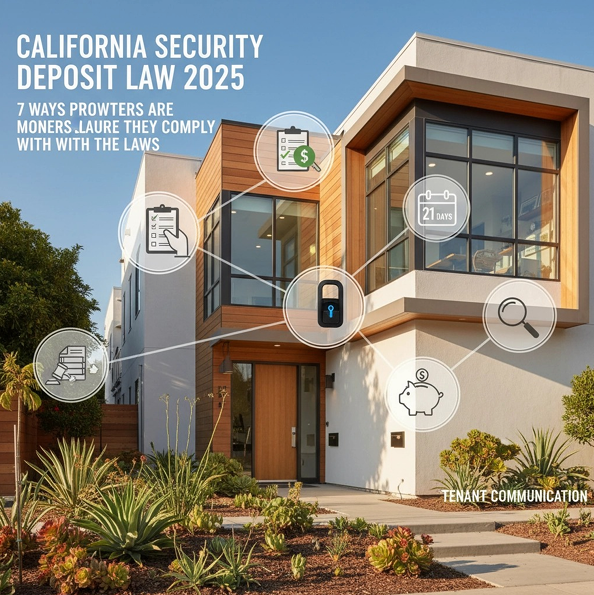
California's security deposit landscape has undergone a seismic shift in 2025, with Assembly Bills 12 and 2801 fundamentally altering how property owners handle tenant deposits. The confluence of these regulatory changes represents both a challenge and an opportunity for savvy landlords who adapt quickly to the new requirements. Smart property owners across Los Angeles aren't just scrambling to meet minimum compliance standards: they're implementing systematic approaches that turn these new regulations into competitive advantages. Here's how the most successful property managers are navigating California's evolving security deposit requirements. 1. Implementing Mandatory Photo Documentation Systems The most significant shift in 2025 centers around AB 2801's photography requirements, which take effect in two critical phases. Beginning April 1, 2025, landlords must photograph units immediately upon receiving possession and before any repairs, then again after completing repairs or cleaning for which they plan to deduct from security deposits.
By Crescent Canyon October 30, 2025
Managing multi-family properties in Los Angeles is not for the faint of heart. A confluence of regulatory shifts, market dynamics, and evolving tenant expectations has created a dynamic landscape that demands sharper execution. LA’s intricate web of rent control ordinances, layered with California’s expanding tenant protections, requires owners to master compliance while still protecting NOI. If it feels like running a Class A asset in a Class Z rulebook, you’re not wrong—just in the right place for solutions. To win in 2025, you must master LA’s three-tier regulatory system, deploy technology that systematizes operations, and stay ahead of market trends reshaping the multifamily sector. This guide distills what matters most so you can maximize returns while navigating the regulatory maze that defines Los Angeles real estate. Understanding LA's Three-Tier Rent Control System LA’s regulatory framework meaningfully impacts strategy, cash flow, and exit options. Your obligations hinge on the building’s construction date, which places you into distinct categories with very different rules—and very different ceilings on revenue.
May 20, 2025
California's rental market continues to experience significant changes in 2025, after a substantial batch of new laws in 2024. The assault on landlord’s ability to increase property values continues with several notable laws and efforts for 2025. These legislative changes reflect California's ongoing efforts to balance the rights and responsibilities of landlords and tenants. Tenant Screening (AB 2493) : Effective January 1, 2025, landlords or their agents may charge a potential tenant an application screening fee only if they accept applications in the order received and approve the first applicant meeting the established criteria. The screening criteria must be provided in writing with the application. ​ Any applicant not approved can ask for their application fees to be returned. Security Deposits (AB 2801): Starting April 1, 2025, landlords must photograph rental units before tenancy begins, after possession is returned (prior to any repairs or cleaning), and after repairs or cleaning are completed. These photographs must be provided to the departing tenant. For tenancies beginning on or after July 1, 2025, initial photographs must be taken at the start of the tenancy. ​ Photos should be time stamped. Rent Reporting for Market-Rate Housing (AB 2747): As of January 1, 2025, residential rental property owners must offer tenants the option to have their positive rental payment information reported to at least one nationwide consumer reporting agency. Fees and Notices (SB 611) : Effective January 1, 2025, landlords are prohibited from charging tenants fees for paying rent or security deposits by check, or for serving, posting, or delivering any notice. Balcony Inspections (AB 2579): This law extends the deadline for property owners to perform balcony and exterior elevated element inspections in buildings with three or more multifamily units from January 1, 2025, to January 1, 2026. ​ And… Success of Proposition 34 (November 2024 Balot initiative). This proposition, while drafted broadly, specifically targeted the Aids Foundation, which has waged a war on California real estate owners over the past decade, sponsoring near annual voter propositions intended to make the entire state of CA rent controlled. The Prop 34 measure mandates that these types of “care providers” allocate at least 98% of their revenues from federal 340B Drug Pricing Program directly to patient care only (and not to sponsoring rent control ballot initiatives along with multi million dollar ad campaigns). They spent approx. $47 million alone in 2024. Over $100 Million in the past 5 years.
Show More